Journal · Ocean & wellbeing
How the sea helps people
Most surfers can tell you the ocean makes them feel better. A growing body of research is starting to explain why, and charities are putting it to work.
Blue space
Why we keep going back to the water
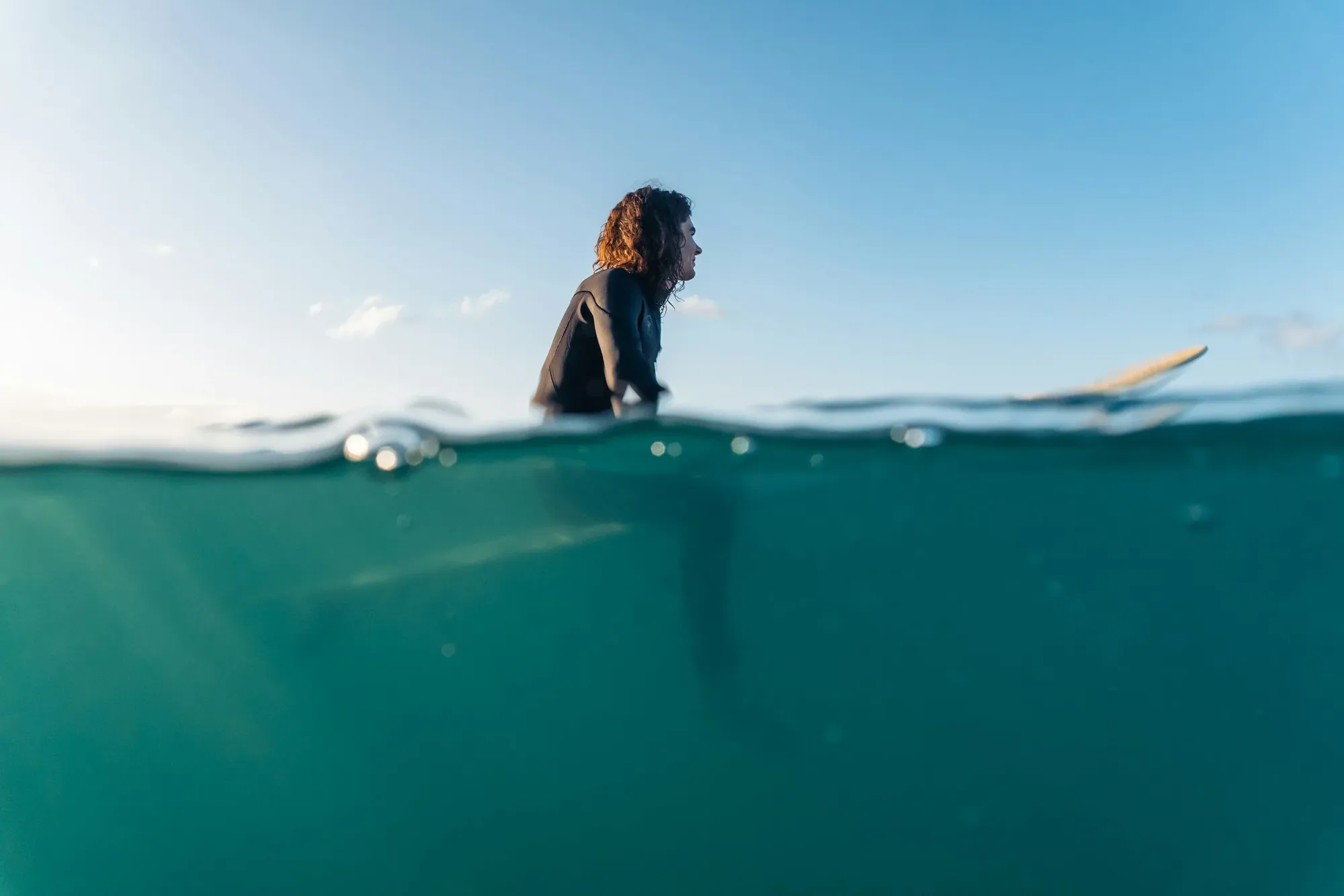
Ask anyone who surfs why they do it and you’ll rarely hear only “the waves”. You’ll hear about switching off, about the cold shock of the first duck dive clearing their head, about the hour where nothing exists except the next set. People talk about the sea as a reset, and they come back from it calmer.
Researchers have a name for the places where this happens: “blue space”, meaning the sea, rivers, lakes and coast. Over the past decade, studies in the UK and elsewhere have looked closely at whether time in and around water really does affect health and wellbeing. The findings are encouraging, with some important caveats.
What the research says
Four findings worth knowing
1. Living near the coast is linked with better health
A 2012 study from the University of Exeter, published in Health & Place, used census data for England and found that people living closer to the coast tended to report better health, with the link possibly strongest in more deprived communities. The authors suggested stress reduction and more physical activity as likely reasons.
2. The coast may help most where life is hardest
A 2019 follow-up, again in Health & Place, looked at nearly 26,000 adults in England. Among urban adults in the lowest-income households, those living close to the coast reported fewer symptoms of mental health disorders than those living further inland. The researchers suggested that access to the coast could help narrow health inequalities.
3. A couple of hours a week in nature matters
A 2019 study in Scientific Reports, based on nearly 20,000 people in England, found that people who spent at least 120 minutes a week in nature, including beaches and the coast, were significantly more likely to report good health and high wellbeing. It didn’t seem to matter whether that time came in one long visit or several short ones.
4. Learning to surf can lift wellbeing
Smaller studies have looked at surfing itself. In one University of Bristol study published in 2023, women who took part in a six-week surf course reported significantly improved mental wellbeing, with lower anxiety and greater confidence.
A note on the evidence. Most of this research finds associations, not proof of cause and effect, and some studies are small. Time by the sea isn’t a treatment or a substitute for professional care. If you’re struggling, talk to your GP or a mental health professional. In the UK, you can call Samaritans free on 116 123, at any time.
Surf therapy
Putting the sea to work: The Wave Project
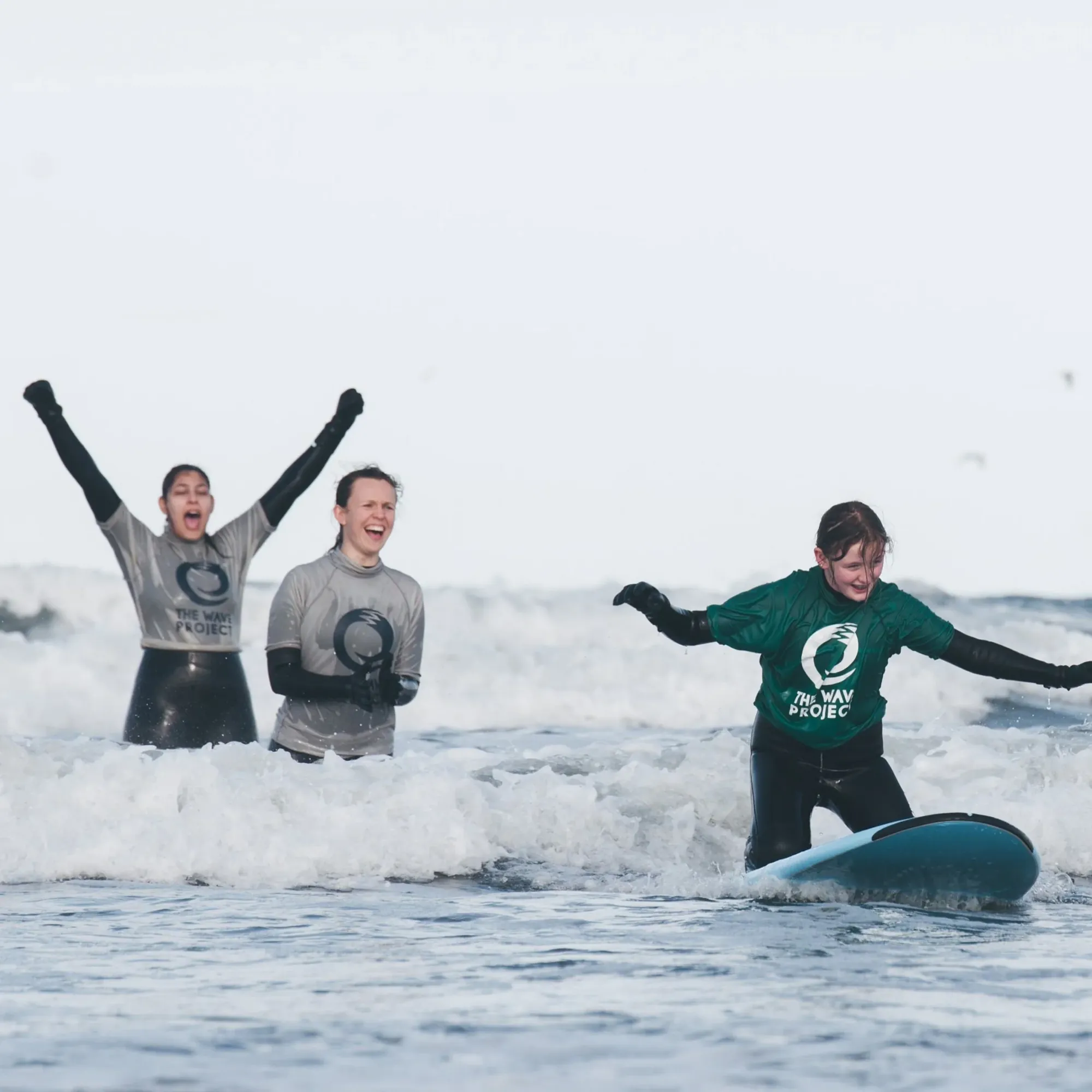
One of the clearest examples of the sea helping people is surf therapy. The Wave Project, a UK charity and one of our ocean partners, has spent around fifteen years using surfing to support children and young people facing anxiety, low self-esteem and other mental health challenges. Participants are paired with trained volunteer mentors and learn to surf over a series of sessions, building confidence, friendships and a sense of belonging along the way. Their approach is recognised by the NHS.
We support The Wave Project because we’ve felt what the sea can do for a person’s state of mind. It’s a big part of why Salt Atlas exists. In October 2026 we joined forces with 1Dance 1Cause for a fundraising night in London, with a raffle that included two Salt Atlas surf expeditions. You can read about it on our blog, and find out how to donate on our Wave Project partner page.


In practice
Getting more blue into your life
- Little and often counts. A walk on the beach, a swim or a short session all add up. You don’t need perfect waves.
- Go with other people. Much of the benefit seems to come from shared experience. Join a club, a beach clean or a group lesson.
- Learn properly. If you’re new to surfing or open-water swimming, take lessons from qualified instructors and learn about rips and tides.
- Look after it back. Clean water is what makes all of this possible. Check water quality before you go in, and support the people working to protect it.
- Give yourself time away. A surf holiday is days in a row by the sea, without a commute or an inbox. For many of our guests, that’s the point.
Time by the sea
Days in a row on the coast
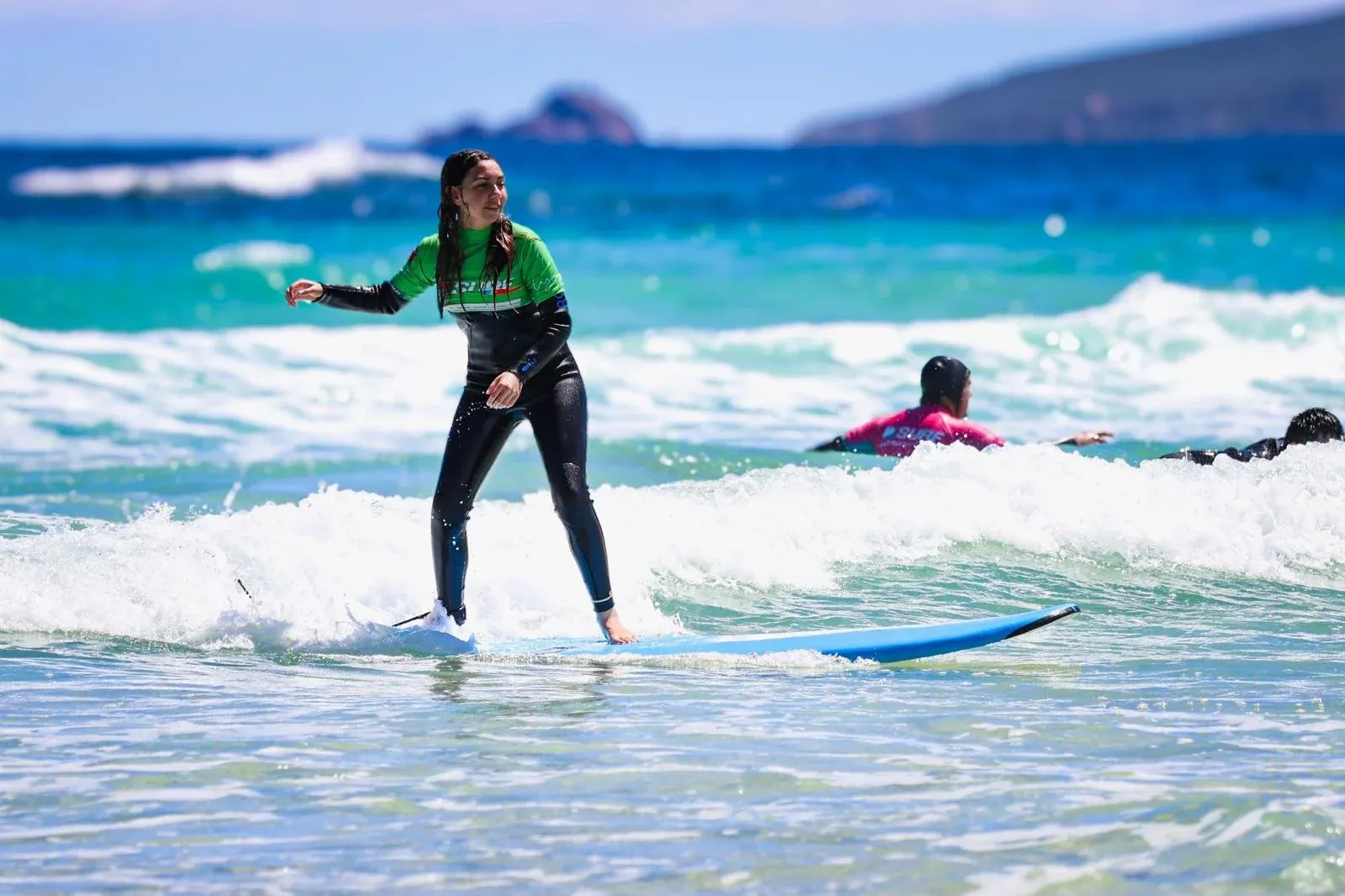 Salt Atlas Expedition
Margaret River & Busselton
Progression
Learn or improve with four lessons from qualified instructors, on Western Australia’s South West coast.
View the expeditionOcean partnerUK charity
The Wave Project
Surf therapy for children and young people, and how to support it.
Read more Journal
Sustainability
Our ocean partners
The charities looking after the water we travel for.
Read moreFlights not included. Guests arrange their own travel insurance.
Sources
Written by Salt Atlas. Checked November 2026.
- Wheeler BW et al. (2012), “Does living by the coast improve health and wellbeing?”, Health & Place 18(5): PubMed.
- Garrett JK et al. (2019), “Coastal proximity and mental health among urban adults in England: the moderating effect of household income”, Health & Place: University of Exeter summary.
- White MP et al. (2019), “Spending at least 120 minutes a week in nature is associated with good health and wellbeing”, Scientific Reports: European Centre for Environment & Human Health summary.
- Surfing and women’s mental wellbeing: University of Bristol, March 2023.
- The Wave Project: waveproject.co.uk.