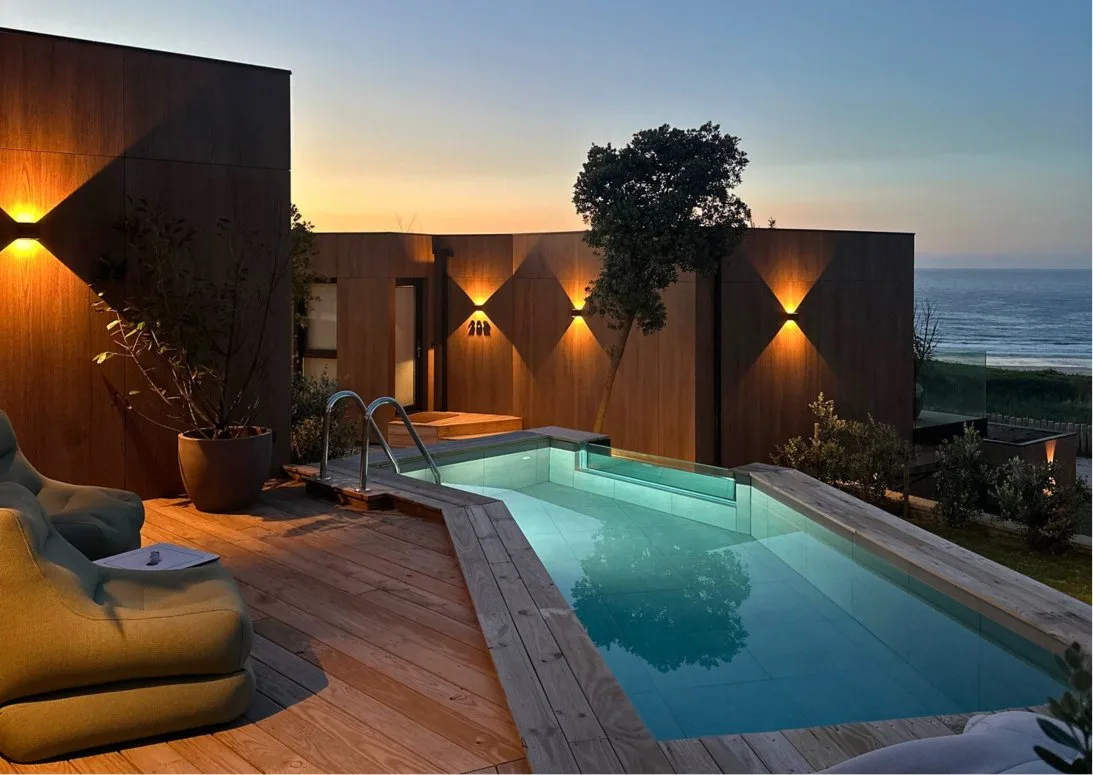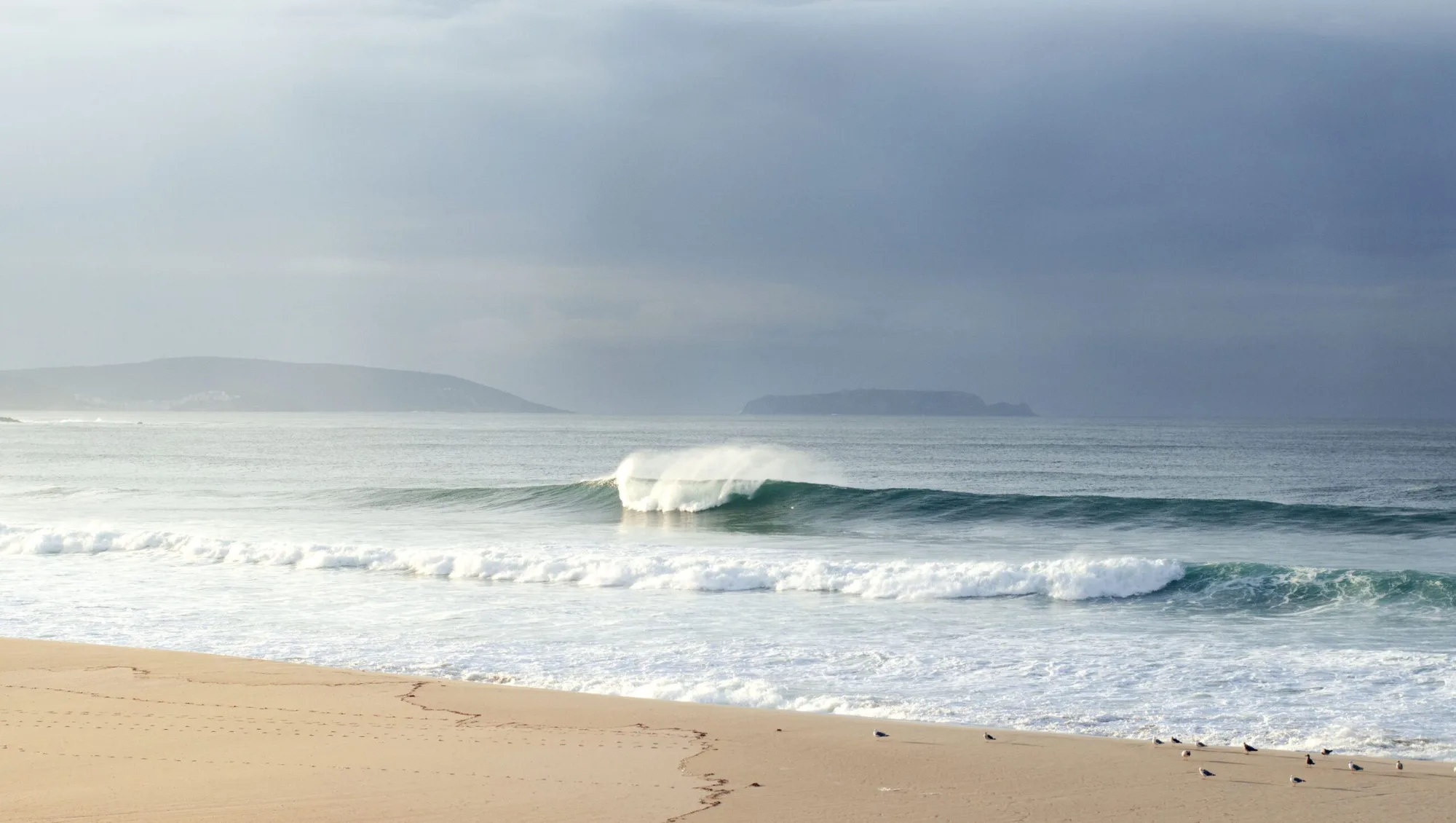
A wave breaking on Praia de Razo, Galicia (photo: Espazo Nature)

Journal · Surf & travel guides · Spain

Surfing Spain

A river-mouth left in the Basque Country, wild Atlantic beaches in Galicia and volcanic reefs in the Canary Islands, all a short flight from the UK. Where to go, when to go and what to know.

Best months
September to MarchAutumn and winter swell
Water
13–18°C in GaliciaWarmer in the Canary Islands
Waves
Beaches, rivermouths, reefsSomething for every level
Flight from UK
About 2 to 4.5 hoursNorth coast to the Canaries
Currency
Euro (EUR)Cards widely accepted

Why Spain

Two oceans, three very different coasts

Spain is easy to underrate as a surf destination. Its north coast faces the Bay of Biscay and picks up the same North Atlantic swells that reach Cornwall and France, but with a rugged, green coastline of cliffs, coves and river mouths. Out west, Galicia takes the open Atlantic head on. Far to the south-west, the Canary Islands sit off the coast of Africa, with volcanic reefs and warmer water through the European winter.

The food, the culture and the short flights from the UK make it an easy place for a surf break of a few days or a longer stay. The Mediterranean coast, by contrast, is mostly flat; for surf, head north, west or to the islands.

When to go

Autumn and winter bring the swell

Spain’s surf season follows the North Atlantic storm track. From around September, low-pressure systems start sending consistent swell, and through the winter the swells get bigger and more frequent, along with more wind and rain. Summer is usually small on the north coast, which can still suit beginners. In the Canary Islands, the cleanest and most consistent surf on the north-facing coasts also comes in autumn and winter.

Surf season by region
RegionJFMAMJJASOND
Basque Country
Asturias
Galicia (Razo)
Canary Islands
Andalusia (Cádiz)
  • Peak season
  • In season
  • Off season

Seasons from Surf-Forecast spot guides for Mundaka, Zarautz, Rodiles, Playa de Razo, Majanicho, Lobos and El Palmar (see sources). Swell and wind vary year to year, so check a forecast before you book flights.

Where to surf

Spain’s surf regions

North coast

The Basque Country

Home to Mundaka, a river-mouth left at the entrance to the Urdaibai estuary that’s one of Europe’s best-known waves. It works on a north-west groundswell with a southerly wind, best on a falling low tide, and is often crowded when it’s on: one for experienced surfers. Nearby Zarautz is a long, consistent beach break with waves for most levels, and San Sebastián’s Zurriola beach is a city surf spot with good food a short walk away.

Peak
December to February
Level
All levels, by break
Fly into
Bilbao (BIO)

North coast

Cantabria & Asturias

Green hills, limestone cliffs and a long run of beaches and river mouths between Santander and Galicia. Rodiles in Asturias is a river-mouth wave that’s best on a north-west swell with a south-westerly wind and a rising low tide, and can be crowded. There are friendly beach breaks along this coast too, and quieter coves if you’re willing to explore.

Peak
October to January
Level
All levels, by break
Fly into
Santander (SDR), Asturias (OVD)

Atlantic north-west

Galicia & the Costa da Morte

Spain’s wild corner, open to the full Atlantic. The Costa da Morte west of A Coruña has big, empty beaches, lagoons and dunes. Praia de Razo, Galicia’s largest open-sea beach, is cleanest from autumn into early winter; the biggest winter storms are for experienced surfers, and summer is small. The water is cool year round, from about 13°C in late winter to about 18°C in late summer.

Peak
October to December
Level
All levels, by season
Fly into
A Coruña (LCG), Santiago (SCQ)
Stay at Espazo Nature

Atlantic islands

The Canary Islands

Volcanic islands off north-west Africa, with reef and point breaks, plenty of beaches for learning and warmer water than mainland Spain. Fuerteventura’s north shore, around Majanicho, has exposed reef and point waves that are best in autumn and winter with a north swell and a southerly wind. Just offshore, the little island of Lobos has a right-hand reef and point wave that works on a north-west swell with a south-easterly wind, most often in January, and is mostly flat in summer. Watch out for rocks and crowds at both. Lanzarote also has well-known reefs.

Peak
October to January
Level
All levels, by break
Fly into
Fuerteventura (FUE), Lanzarote (ACE)

South-west

Andalusia’s Atlantic coast

The Cádiz coast between the Portuguese border and the Strait of Gibraltar has long sandy beaches and a laid-back feel. El Palmar, near Vejer de la Frontera, is a sandbar beach break, mostly rights, that works on a south-west swell with an easterly offshore wind, best in winter and spring and most often in December. It’s often too small, can be crowded when it’s on and has strong rips, so it’s one to surf when a forecast lines up rather than to plan a whole holiday around. The area is better known for wind sports around Tarifa.

Peak
December
Level
All levels, on the right day
Fly into
Seville (SVQ), Jerez (XRY)

In the lineup

Surf etiquette and local life

Spain has a strong, long-established surf culture, especially in the Basque Country. The famous waves have local crews who surf them every day, and they’ll expect visitors to know the rules.

  • Don’t drop in, don’t snake, and wait your turn at crowded peaks. A smile and a “hola” go a long way.
  • If you’re learning, use a surf school and stay at beginner-friendly beaches, away from the river mouths and reefs.
  • Respect lifeguard flags on patrolled beaches in summer, and swimming zones marked for bathers.
  • In the Basque Country and Galicia, regional languages, Basque and Galician, are spoken alongside Spanish. Learning a word or two is appreciated.
  • Eat late. Lunch is often from around 2pm and dinner from 9pm, which fits a late-afternoon session nicely.

Before you go

Entry, health and insurance

Rules change, and they differ by nationality. What follows was checked in November 2026 for British passport holders and is general information, not legal or immigration advice. Check GOV.UK travel advice for Spain before you travel.

Passport and visas

  • Spain is in the Schengen area. British passport holders can visit without a visa for up to 90 days in any 180-day period, counting time in all Schengen countries together.
  • Your passport must have been issued less than 10 years before the day you arrive, and be valid for at least three months after the day you plan to leave.
  • The EU’s Entry/Exit System (EES) is being introduced across the Schengen area. You may need to register your fingerprints and photo at the border, at no cost, so allow extra time at passport control.
  • Border staff may ask to see a return or onward ticket, proof of travel insurance, where you’re staying and that you have enough money for your stay.
  • The EU plans to introduce ETIAS, a paid online travel authorisation for visa-free visitors. Check GOV.UK for whether it’s needed when you travel, and only ever apply through the official EU website.

Health and insurance

  • A UK Global Health Insurance Card (GHIC) or valid EHIC gives access to state healthcare in Spain on the same terms as residents. It isn’t a replacement for travel insurance.
  • Take out travel insurance that covers surfing and any other water sports you plan to do.

What to pack

A packing list for Spain

  • A 4/3 wetsuit for the north coast and Galicia in autumn and winter, plus boots and gloves in the coldest months
  • A 3/2 for the Canary Islands in winter, or for the north coast in late summer
  • Two boards if you can, including one for bigger winter days; otherwise hire locally, as board shops are easy to find
  • A changing robe and a warm jacket: winter evenings in the north are cold and wet
  • Reef booties for the Canaries’ volcanic reefs

FAQ

Common questions

Where is the best surf in Spain?

For consistency, the north coast (the Basque Country, Cantabria and Asturias) and Galicia, which face the North Atlantic. For warmer water in winter, the Canary Islands. Mundaka in the Basque Country is the best-known wave, but it’s for experienced surfers and is often crowded.

When is the best time to surf in Spain?

Autumn and winter, roughly September to March, bring the most consistent North Atlantic swell. Summer is usually small on the north coast, which can suit beginners.

Is Spain good for beginner surfers?

Yes. There are surf schools and gentle beach breaks along the north coast, in Galicia and in the Canary Islands. Summer and early autumn bring the smaller, friendlier waves that suit learning.

How cold is the water in northern Spain?

On Galicia’s Costa da Morte, average sea temperatures range from about 13°C in late winter to about 18°C in late summer, so you’ll want a 4/3 wetsuit in winter.

Do I need a visa to surf in Spain with a UK passport?

Not for short stays. British passport holders can visit the Schengen area visa-free for up to 90 days in any 180. You’ll be registered in the EU’s Entry/Exit System at the border, and should check GOV.UK for the latest on ETIAS before you travel.

Sources

Written by Salt Atlas. Checked November 2026. Facts were taken from these first-hand public sources:

Photos: Espazo Nature. This guide is general information to help you plan. It isn’t legal, immigration, medical or safety advice, and conditions change. Always check official sources for your nationality before you travel.

Newsletter

First look at new expeditions

Sign up for the latest departures and get early access before trips sell out. Small groups fill fast.

We'll email you about new departures and offers. Unsubscribe any time. See our privacy policy.

Partners & memberships