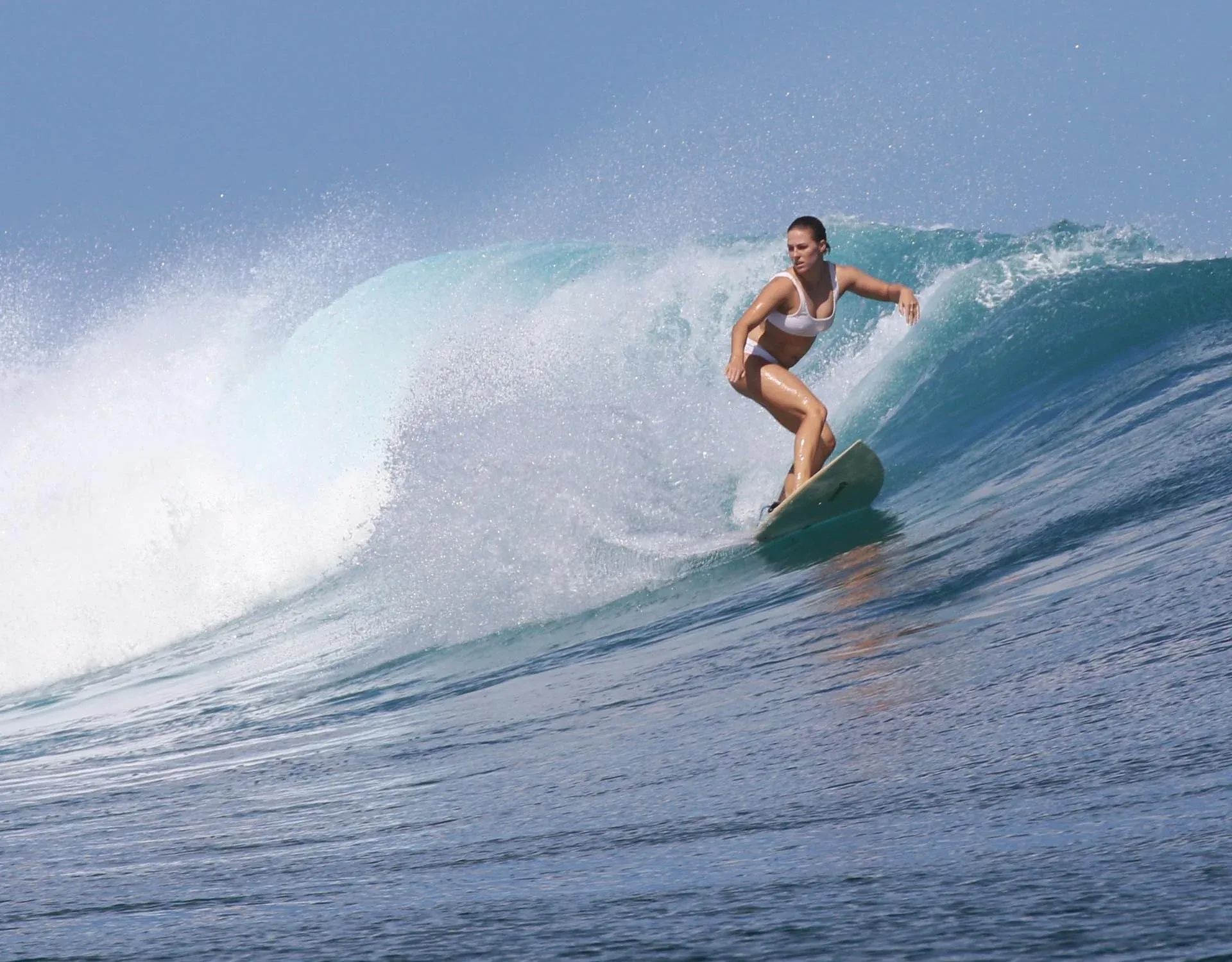
Surfer carving across a wave at T-Land, Rote Island

Journal · Surf & travel guides · Indonesia

Surfing Indonesia

Warm water, coral reefs and a dry-season swell machine that has drawn surfers for decades. Where to go, when to go and what to know before you land.

Best months
April to OctoberThe dry season, region by region below
Water
26–30°CAverage sea temperatures, Sumatra to Sumbawa
Waves
Mostly reefPoints, slabs and a few softer peaks
Best for
Intermediate to advancedSome regions suit improvers
Currency
Indonesian rupiah (IDR)Carry cash for the islands

Why Indonesia

Thousands of islands, all facing the swell

Indonesia sits in the path of the Indian Ocean’s long-period groundswell. Storms far to the south and south-west send energy north for days on end, and it arrives at a chain of islands lined with coral reef. Shape the reef right, add a light offshore and you get the waves that fill surf films: long lefts that peel without a section, rights that throw into a clean barrel, and a lot of perfectly good waves nobody has ever named.

It isn’t only about the famous breaks. A surf holiday here is a run of early starts, boat rides across glassy channels, fresh fish at dinner and afternoons that slow right down. Every day is shaped by the swell, the wind and the tide, which is half the fun.

The catch is that most of the best surf breaks over shallow coral, and many of the islands are remote. A little planning goes a long way, and this guide covers the parts that matter.

When to go

Follow the dry season

For most of the surfing islands, the dry season runs from around April to October. That’s when the Southern Hemisphere winter sends its most consistent swells, and when the trade winds blow from the south-east, offshore at many of the best-known breaks. Peak months bring the biggest and most reliable surf, and the busiest lineups.

The wet season, roughly November to March, is smaller and less predictable, with more rain and changeable wind. It isn’t a write-off. In the Mentawai Islands, for example, the quieter months are often a good time for intermediate surfers who want smaller waves and fewer people.

Surf season by region
RegionJFMAMJJASOND
Mentawai Islands
Nias & Hinako
Telo & Banyak
West Sumbawa
Rote Island
  • Peak season
  • In season
  • Off season

Seasons from Surfline and Surf-Forecast spot guides (see sources at the end). Swell and wind vary year to year, so check a forecast before you book flights.

Where to surf

The regions worth crossing the world for

Indonesia is far too big to surf in one go, so most people pick one region and settle in. Here’s how the main surf zones compare. Bali and Lombok are the usual gateways, with their own busy and well-known breaks, but the regions below are where the remote, warm-water reef surf really opens up.

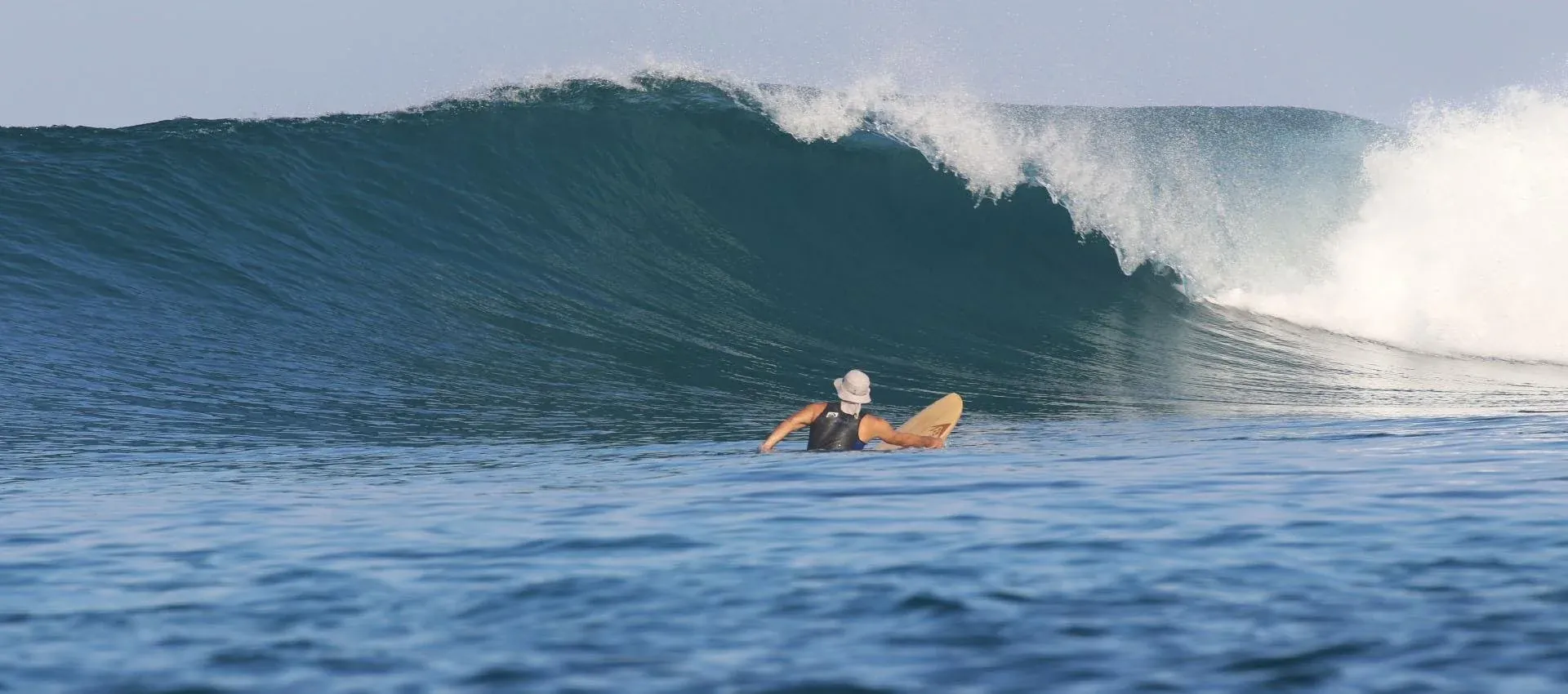
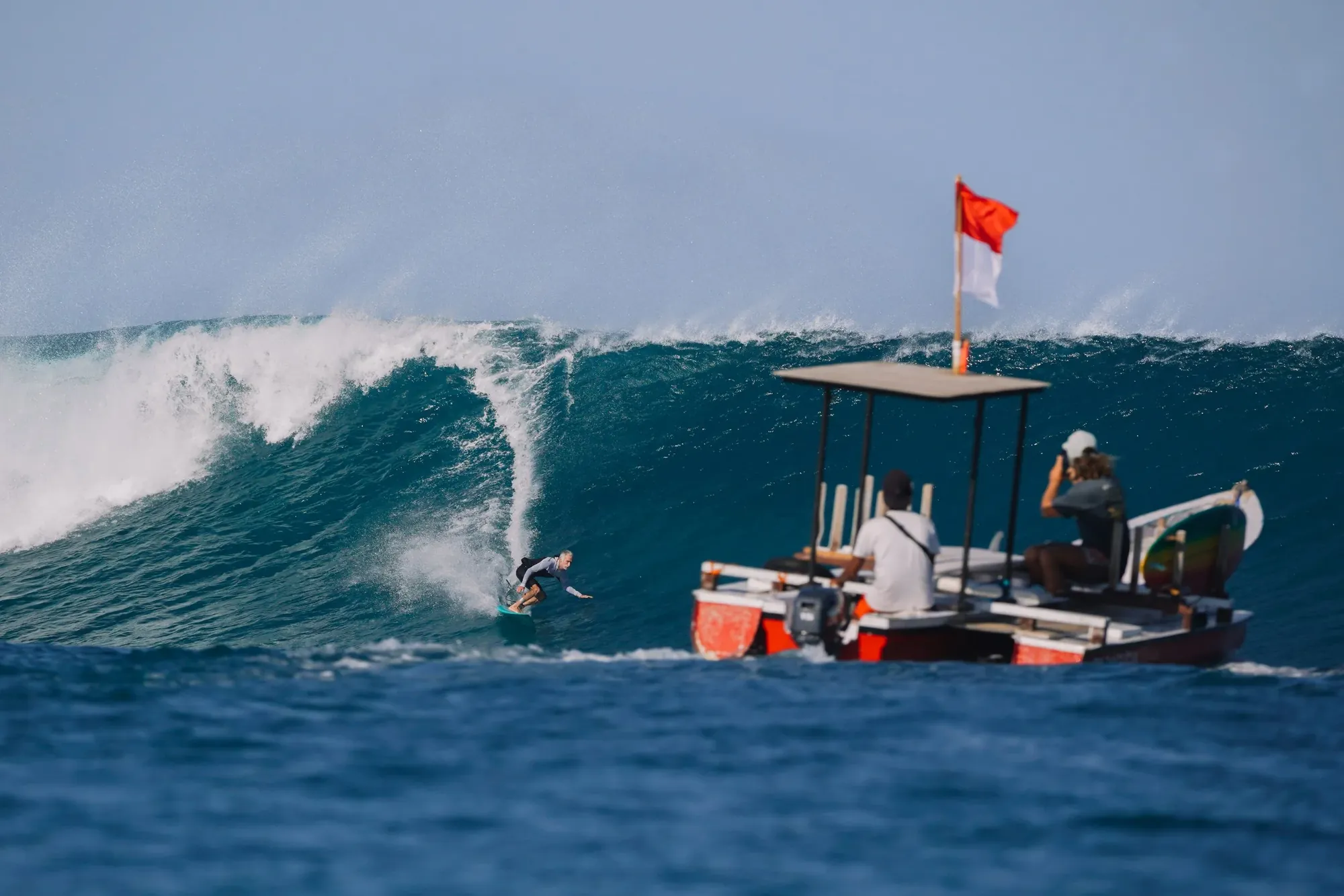
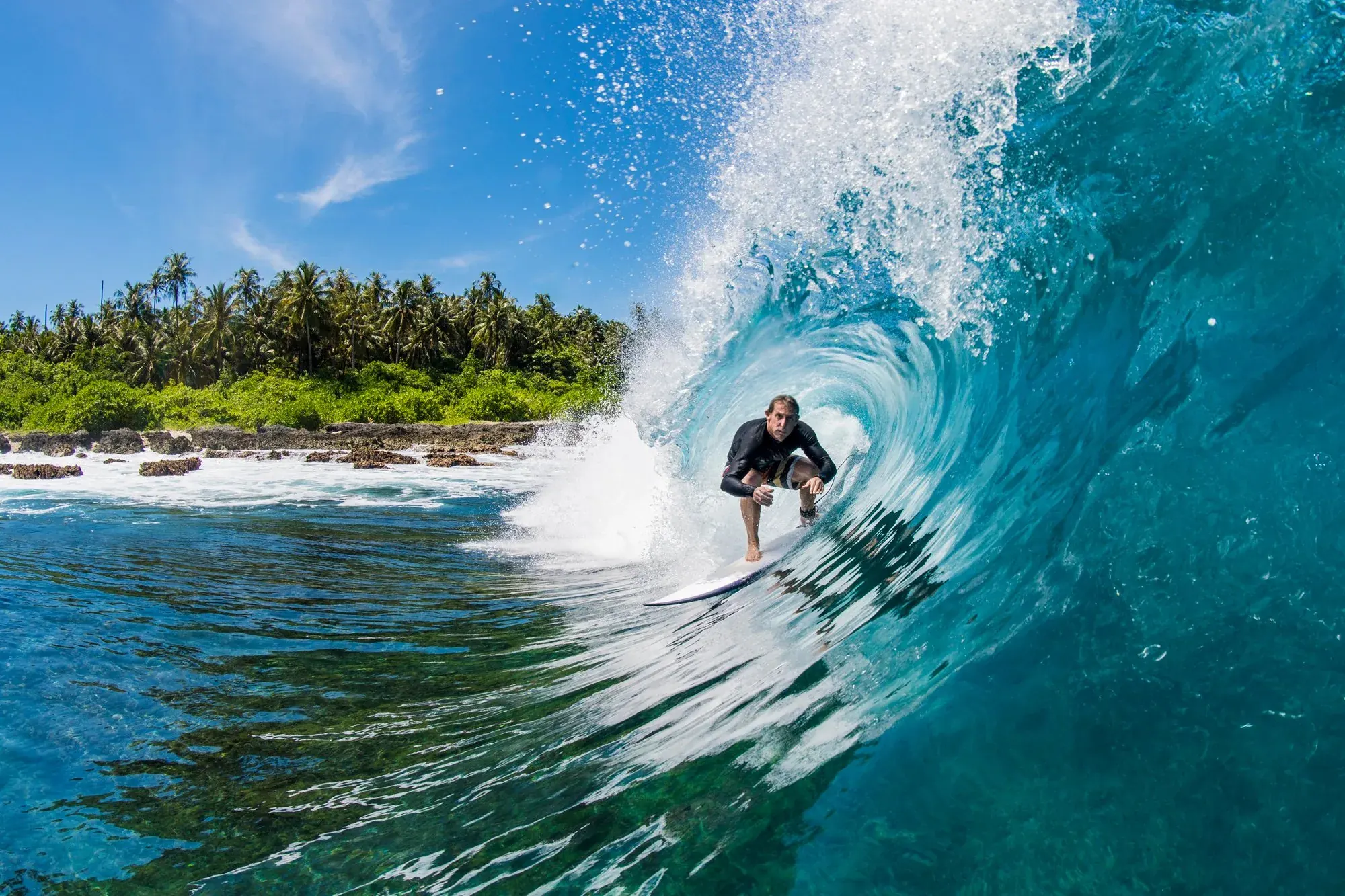
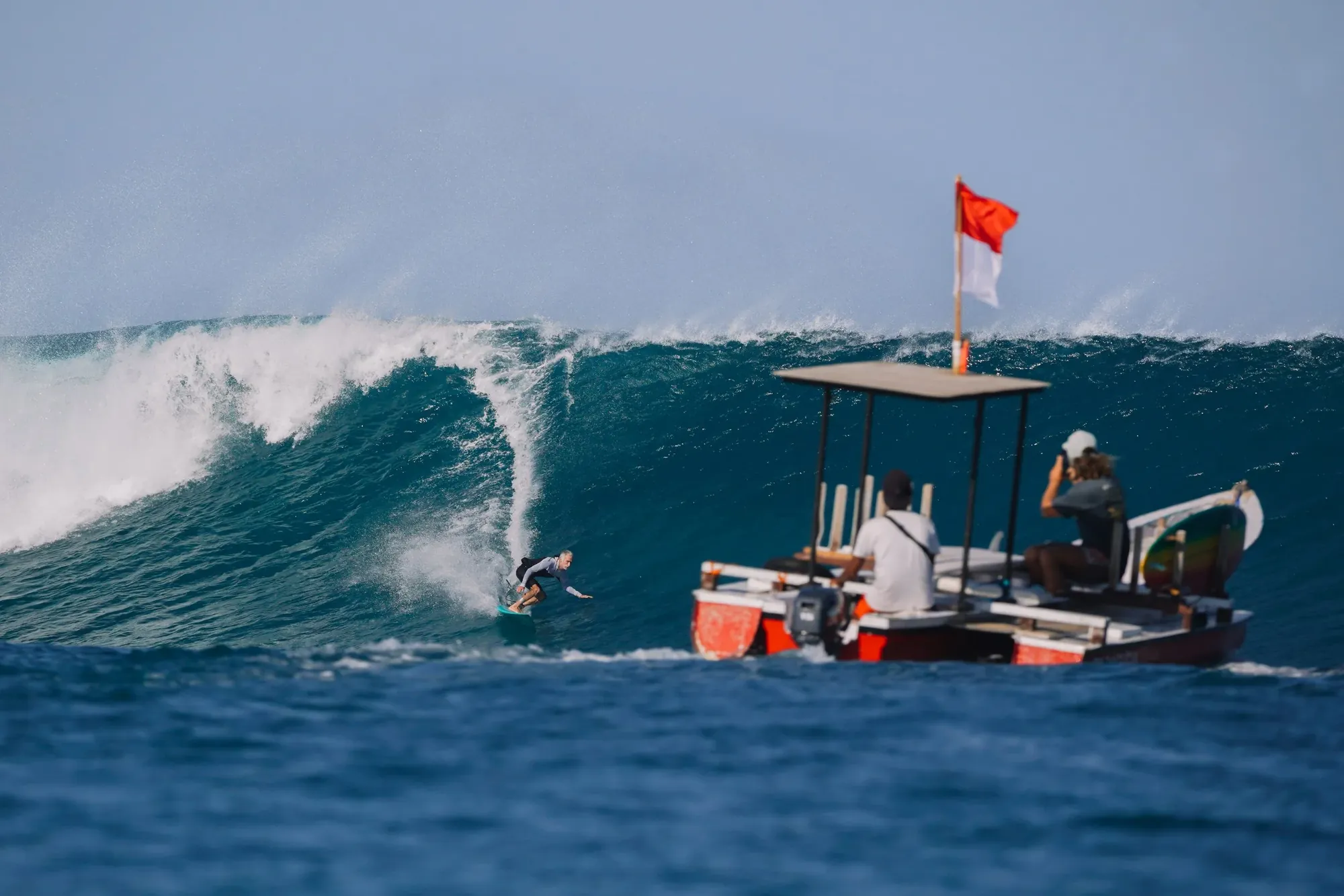
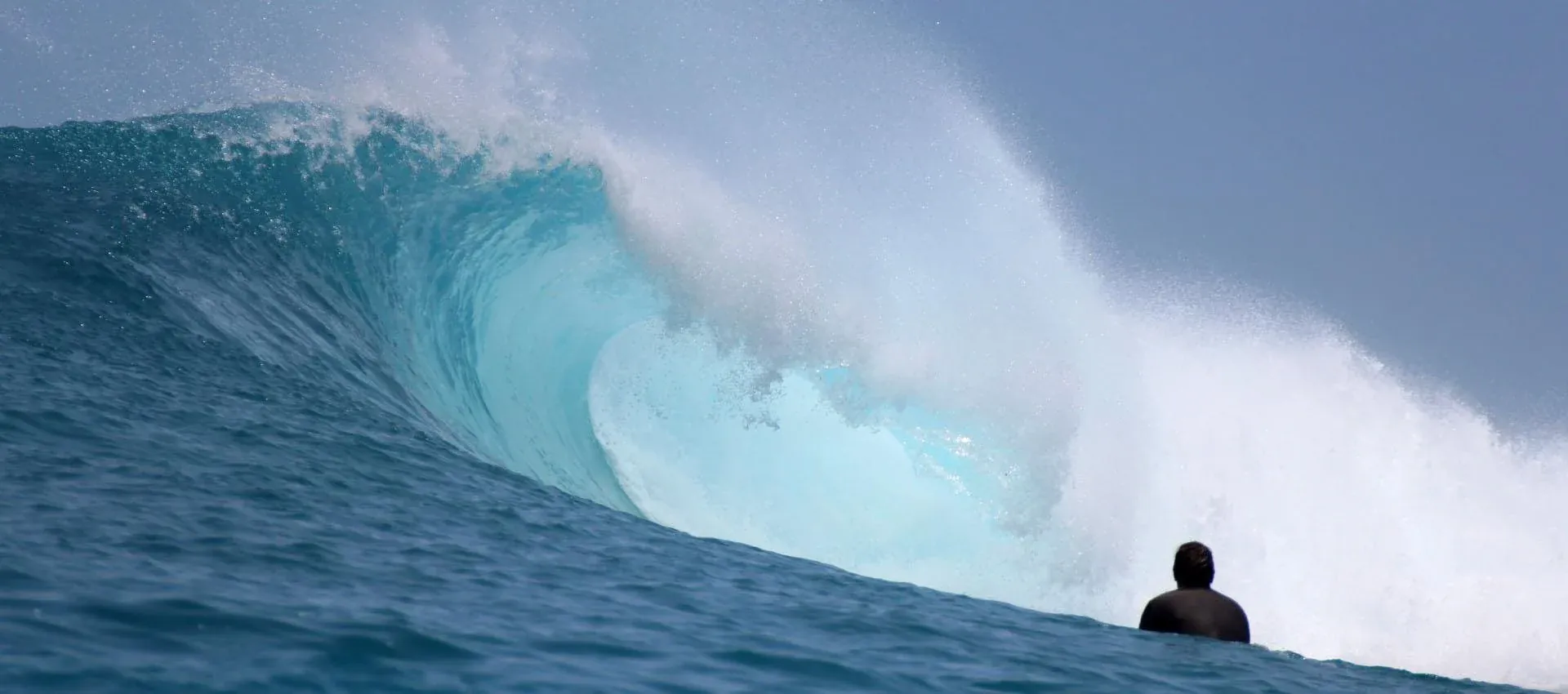
A surfer inside a barrel off Asu Island, Hinako Islands A surfer on a Rote Island reef wave with a boat in the channel A surfer paddling out at Do'o, a reef break off Rote Island

West Sumatra

Mentawai Islands

A chain of jungle-covered islands off Sumatra’s west coast, and the reason many surfers come to Indonesia in the first place. Dozens of reef passes and points within boat range mean there’s nearly always somewhere working, from playful walls to heavy barrels. Most visitors stay at a resort or live aboard a charter boat and travel to the waves each day by boat.

Peak
April to September
Level
Intermediate to advanced
Fly into
Padang (PDG), then ferry or speedboat
Mentawai stays

North Sumatra

Nias & the Hinako Islands

Nias was one of the first Indonesian islands to make surf history, and its neighbours in the Hinako group, Asu and Bawa, keep the tradition going. Expect powerful reef waves, small island communities and a properly remote feel once you cross from Nias by boat.

Peak
May to October
Level
Intermediate to advanced
Fly into
Gunungsitoli, Nias (GNS)
Stay at Asu Camp

North Sumatra & Aceh

Telo & Banyak Islands

Two quieter island groups off Sumatra with small, surf-focused places to stay and plenty of reef within reach. Crowds are lighter than in the better-known zones, and with fewer guests at each base it’s easier to find a session with only a few people out. The Banyak Islands are in Aceh province, where local laws are stricter than elsewhere in Indonesia (see “Before you go”).

Peak
May to October
Level
All levels, by break
Fly into
Padang (PDG) for Telo; Nias (GNS) for Banyak
Telo and Banyak stays

West Nusa Tenggara

West Sumbawa

East of Lombok, West Sumbawa mixes dry hills, quiet beaches and a cluster of quality reef breaks, from forgiving peaks to fast, hollow lefts. Without big resort towns it feels far more relaxed than Bali, and the water runs a little cooler in the middle of the year.

Peak
June to August
Level
All levels, by break
Fly into
Sumbawa via Bali, or Lombok and the ferry
Stay at Baha Baha Villas

East Nusa Tenggara

Rote Island

One of Indonesia’s southernmost islands, just off West Timor. Life moves slowly around the village of Nembrala, the lagoon glows turquoise and the reef picks up swell all through the dry season. T-Land, a long left with several sections, is the headline wave, with punchy rights and quieter reefs close by.

Peak
April to October
Level
Intermediate to advanced
Fly into
Kupang, West Timor, then on to Rote
Read our Rote Island surf guide

How to travel

Resort, boat or guided expedition?

How you travel shapes the whole experience as much as where you go. There’s no wrong answer, only what suits your surfing, your budget and how much organising you want to do.

Stay

A surf resort or camp

One base, a comfortable room and boat or road access to a handful of nearby breaks. Good for settling into a rhythm, mixing surf with downtime, and travelling with friends or a partner who surfs a different level.

Charter

A surf charter boat

You live aboard and the boat moves to the swell, so you can reach waves too far from any resort. Best for confident surfers who want to maximise time in the water, with less space and fewer extras on board.

Expedition

A guided expedition

A small group, a set itinerary and a guide who handles the logistics, reads the conditions and gets you to the right wave on the day, with experiences off the board built in. A good fit if it’s your first time in Indonesia or you’d rather just surf.

Surfing reef

Respect the reef

Coral reef gives Indonesian waves their shape, and it doesn’t forgive mistakes. A few habits make a big difference.

  • Surf within your level. Watch a few sets before paddling out and ask about the tide. Many reefs get shallower and sharper as the tide drops.
  • Fall flat and shallow. Avoid diving off your board, and cover your head as you come up.
  • Clean every cut, every time. Coral cuts can get infected quickly in the heat. Rinse with fresh water, clean thoroughly and keep them covered.
  • Know the way in and out. Check the channel before you paddle out, and how to get back over the reef when the tide changes.
  • Mind the lineup. Wait your turn, don’t drop in, and give way to local surfers. A friendly hello in the water goes a long way.
  • Leave it as you found it. Don’t stand on live coral, and take rubbish and plastics away with you.
A surfer paddling over a reef wave on Rote Island

Before you go

Entry, health and the law

Rules change, and they differ by nationality. What follows was checked in November 2026 and is general information, not legal, immigration or medical advice. Before you travel, check your own government’s travel advice and Indonesia’s official immigration website.

Passport and visa

  • Your passport should be valid for at least six months from the day you arrive, with blank pages for stamps.
  • Many nationalities, including British passport holders, can get a 30-day visa on arrival, or apply in advance online for an electronic visa on arrival (e-VOA). Check whether your passport qualifies on the official e-Visa site, and only pay through official government channels, as copycat visa sites are common.
  • A visa on arrival is for tourism. Paid work, including filming or creating commercial content for brands, needs a different visa.
  • Overstaying is expensive, with a daily fine. If you might stay longer, extend before your visa runs out.

Arrival forms and local levies

  • Indonesia uses a free online arrival declaration, the All Indonesia card, which you complete shortly before you land. Use the official app or website only.
  • Bali charges foreign visitors a tourism levy, currently IDR 150,000, paid online or on arrival.
  • The Mentawai Islands regency collects a surf levy from visiting surfers. Ask your stay or charter how it’s paid and whether it’s included.

Health and insurance

  • See a travel health clinic or your doctor several weeks before you go, about vaccinations and mosquito-borne illness. Dengue occurs across Indonesia and malaria risk varies by island, so cover up and use repellent, especially at dawn and dusk.
  • Rabies is present. Avoid touching dogs, monkeys and other animals, and get any bite or scratch checked straight away.
  • Take out travel insurance that clearly covers surfing and medical evacuation. Medical care on the outer islands is limited, and getting to a hospital can mean a long boat ride and a flight.

Local laws worth knowing

  • Indonesia has zero tolerance for drugs, with very severe penalties. Cannabis products, including CBD, are illegal in any form.
  • Aceh province, which includes the Banyak Islands and Simeulue, applies Sharia law to visitors as well as residents. Alcohol is illegal there, and modest dress is expected away from the surf.
  • Carry your passport or a copy of it, as you can be asked for ID.
  • Most foreign driving licences aren’t valid on their own, so to ride a scooter you’ll need an International Driving Permit, plus a helmet. Insurers often exclude accidents without them.
  • Methanol in counterfeit spirits has caused deaths in tourist areas, including in drinks bought at bars. Stick to sealed, branded drinks and get help fast if anyone feels unwell after drinking.

Boats, earthquakes and tsunamis

  • Boat travel is part of surfing here. Check there are life jackets on board, and avoid crossings after dark or in rough weather.
  • Indonesia sits on an active fault line. If you feel a strong or long earthquake near the coast, move to high ground straight away and follow local instructions. Indonesia’s official BMKG app gives earthquake and tsunami warnings.

What to pack

Pack for reef and remote islands

  • Boards: your everyday shortboard plus a step-up if you’re chasing size. A board bag with good padding and spare fins and leash.
  • Sun cover: a long-sleeve rash vest, a surf hat and reef-safe sunscreen. The equatorial sun is fierce in the middle of the day.
  • Reef protection: reef boots if you’re new to coral, and a light spring suit or surf leggings for extra cover.
  • First aid: antiseptic, sterile dressings, waterproof plasters, ear drops and any medicine you need, in its original packaging.
  • Ding repair kit: board repair can be hard to find on the outer islands.
  • Money: some cash in rupiah. Card payments and cash machines are scarce once you leave the main towns.
  • Mosquito repellent, a refillable water bottle and a dry bag for boat days.
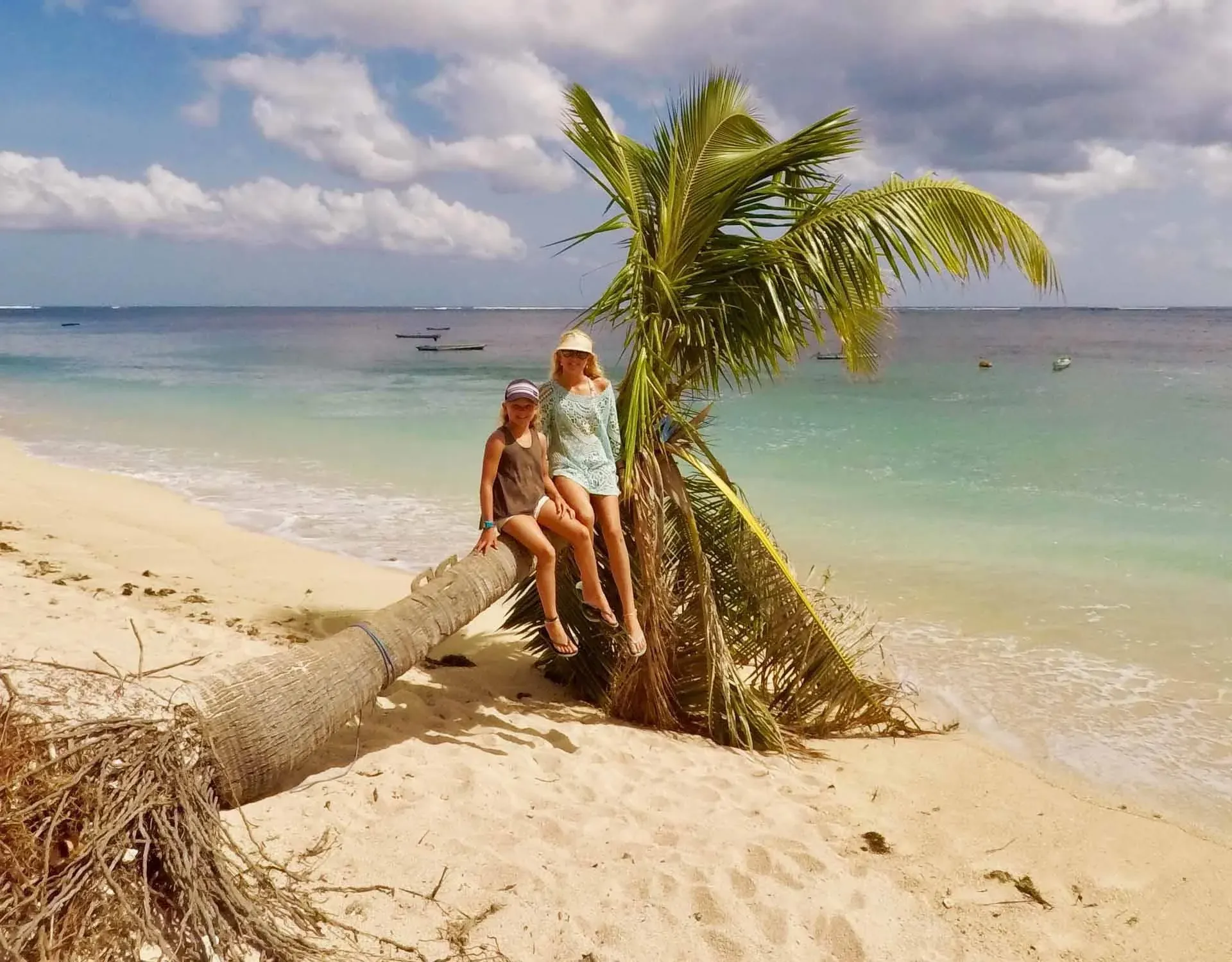
Guests relaxing on a palm tree on the beach at Nembrala, Rote Island

Local life

Be a good guest

Indonesia is a mostly Muslim country, with Hindu Bali and largely Christian communities in parts of the east. Customs change from island to island, but a few things hold almost everywhere.

  • Swimwear is for the beach and the boat. Cover your shoulders and knees in villages, shops and places of worship.
  • Learn a few words of Bahasa Indonesia. Terima kasih (thank you) and selamat pagi (good morning) earn a smile everywhere.
  • During Ramadan, avoid eating, drinking or smoking in public in the daytime in Muslim areas. Bali shuts down completely for Nyepi, the day of silence, including the airport.
  • Ask before photographing people, and before flying a drone near villages or other surfers.
  • Spend locally where you can. Local warungs, boat drivers and guides keep island economies going.
  • Rubbish services are limited on small islands. Refuse single-use plastic and carry out what you bring in.

FAQ

Common questions

Is Indonesia good for beginner surfers?

Most of Indonesia’s best-known waves break over shallow reef and suit intermediate and advanced surfers. Beginners can still have a great time with lessons at the right place and season, and some regions have softer reefs and sand-bottom peaks. Pick a stay or expedition that lists your level, and be honest about your ability.

When is the best time to surf Indonesia?

For the main surf regions, April to October brings the most consistent swell and the best winds, with the middle months usually the most reliable. The wet season, roughly November to March, is smaller and quieter, which can suit improving surfers.

Do I need a wetsuit?

Not for warmth. Around the Sumatran islands the sea sits at about 29–30°C all year, and in West Sumbawa it dips to around 26°C in the middle of the year. A rash vest protects you from the sun, and a thin spring suit or leggings gives some protection on the reef.

How do I get to the Mentawai Islands?

Fly into Padang (PDG) in West Sumatra, then cross by fast ferry or speedboat. The crossing takes several hours, and ferry days follow the timetable, so your stay or charter will usually plan your arrival around it.

Do I need travel insurance that covers surfing?

Yes. Check that your policy covers surfing, boat travel and medical evacuation from remote islands, and read the small print on alcohol and scooters.

Sources

Written by Salt Atlas. Checked November 2026. Facts were taken from these first-hand public sources:

This guide is general information to help you plan. It isn’t legal, immigration, medical or safety advice, and conditions change. Always check official sources for your nationality before you travel.

Newsletter

First look at new expeditions

Sign up for the latest departures and get early access before trips sell out. Small groups fill fast.

We'll email you about new departures and offers. Unsubscribe any time. See our privacy policy.

Partners & memberships